




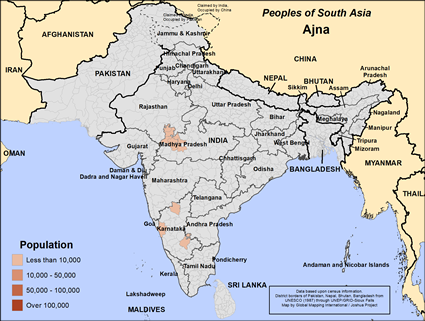
The Ajna people in India are also known as Anjana Chaudhary or Kalbi and are considered a Hindu caste group. They are found primarily in western India, especially in Rajasthan and Gujarat, and are associated with names such as Patel, Chaudhary, Desai, and Jagirdar. Historically, they are regarded as part of the Other Backward Classes (OBC) in some regions.
Traditionally, the Ajna trace their origins to the goddess Anjani Mata, who is believed in Hindu tradition to be the mother of Hanuman. Their community narratives include legends of divine protection and a transition from a warrior identity to an ??????? (agricultural) way of life, with farming becoming central to their identity.
The Ajna have historically been farmers, often small landowners who cultivated crops and raised cattle. In modern times, many still maintain agricultural livelihoods, though increasing numbers have moved into a variety of professions, including government service, military roles, business, and technical fields.
Family life is structured around traditional community values, with strong emphasis on marriage, kinship, and social roles. Their diet typically includes staple foods such as bread, rice, curry, and dairy products. Community life often revolves around family events, agricultural cycles, and social gatherings, reflecting both traditional rural patterns and gradual modernization.
The Ajna people are Hindus. Their beliefs include devotion to deities within the Hindu pantheon, along with reverence for figures such as Anjani Mata. Religious life includes participation in key life-cycle rituals such as birth ceremonies, initiation rites, marriage, and funeral practices.
They celebrate major Hindu festivals such as Diwali, Holi, Navratri, and Raksha Bandhan. Their religious practices reflect a traditional Hindu worldview that combines ritual observance, devotion, and cultural customs.
The Ajna face both social and spiritual challenges. Socially, issues such as substance use—particularly the consumption of opium-based preparations in social settings—can create ongoing problems within the community. Traditional marriage expectations, including arranged or early marriages and strict caste boundaries, can also lead to conflict and social pressure.
Spiritually, they have limited exposure to the gospel and little access to consistent biblical teaching. Their strong cultural and religious identity within Hinduism presents a barrier to understanding the message of Christ. Meaningful engagement requires patient, long-term relationships and clear communication of the gospel in a culturally appropriate way.
Pray that the Ajna people would come to understand the truth of the gospel and place their faith in Jesus Christ.
Ask God to raise up faithful workers who will engage the Ajna with wisdom, humility, and perseverance.
Pray that the Ajna would be adopted through the People Group Adoption program, leading to sustained prayer and intentional gospel outreach.
Pray that those who come to faith would grow in spiritual maturity and begin to disciple others within their community.
Scripture Prayers for the Ajna in India.
https://en.wikipedia.org/wiki/Anjana_Chaudhari
| Profile Source: Joshua Project |



